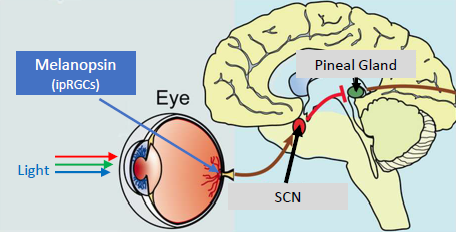
A photopigment which is sensitive to blue light (480-490 nm) like the blue sky. It is in the Retina, in the ipRGCs (intrinsically photosensitive retinal ganglion cells) of the human eye.
Melanopsin communicates with the brain directly with the SCN, and not via the visual cortex.
PINEAL GLAND Produces and secretes the hormone Melatonin
MELATONIN Regulates the sleep-wake cycle and orients the body’s circadian rhythm
SUPRACHIASMATIC NUCLEUS (SCN) The circadian pacemaker also called the master clock. Regulating body temperature, hormone release (melatonin/cortisol), and the metabolism.
It regulates the release of melatonin by the pineal gland.
Sunrise / Daylight – signals wakefulness and the SCN suppresses melatonin release
Sunset / Night-time – signals sleep time and the SCN signals the pineal gland to release melatonin
The definitions shown here are simplified for the purpose of this document.
Why artificial light and technology affect circadian rhythms
Typically, in an office, light levels can be 0.4% of natural daylight and 2,000% brighter than moonlight at night.
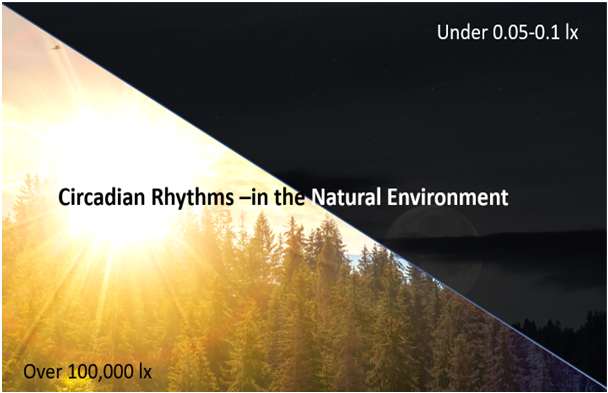
Humans, like all life on earth, have adapted to the 24-hour day-night cycle …over 100,000 lux during the day and .05-0.1 lux at night.
In less than a century, we’ve completely reversed the natural balance of bright days and dark nights. The transition of the workforce from being rural and outdoors, to being urban and mostly indoors has dramatically reduced our exposure to natural sunlight.
Conversely, artificial lighting floods our nights, keeping us awake, disrupting our sleep, and altering our biology in ways we are only beginning to understand.
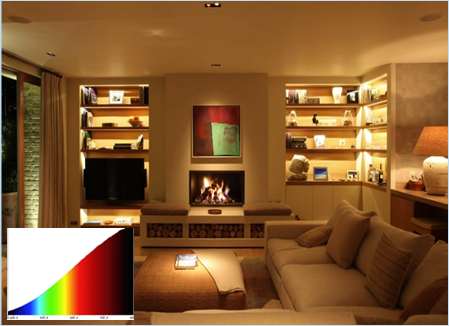
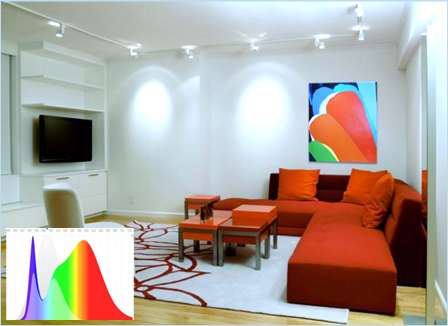
LEDs have much higher levels of blue light, than incandescent light sources. See below. Laptops, tablets and phones can have much higher levels of blue light.
In less than a century, we’ve completely reversed the natural balance of bright days and dark nights!
Every year, thousands of Australians unknowingly take a dangerous gamble when they get behind the wheel tired. Fatigue doesn’t just make you drowsy, it significantly…