Scientific finding: Low daytime light and bright night-time light are associated with psychiatric disorders: an objective light study in >85,000 UK Biobank participants
Source: medRxiv
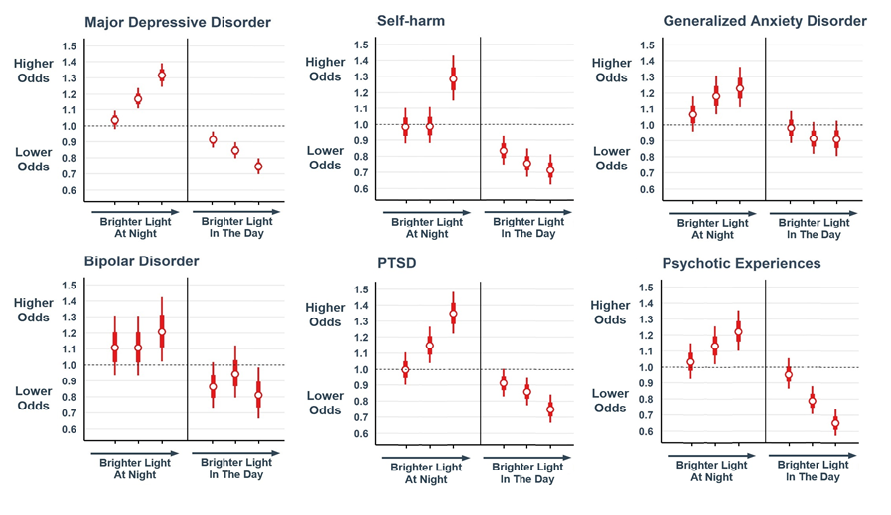
“Greater night-time light exposure was associated with increased risk for major depressive disorder, generalized anxiety disorder, PTSD, psychosis, bipolar disorder, and self-harm behaviour…
…Independent of night-time light exposure, greater daytime light exposure was associated with reduced risk for major depressive disorder, PTSD, psychosis, and self-harm behaviour.”
“Avoiding light at night and seeking light during the day may be a non-pharmacological means of broadly improving mental health”
This graph is adapted from Nature Mental Health.